 Back to Tips
Ponta Delgada in a day: old town, market and where to eat
 Azores Guide
Ponta Delgada's old centre fits into one walking day. The route, with market and museum hours, the lava cave's tour times, the prices and where to eat.
One day is enough for the centre of Ponta Delgada, which is small and flat: the Mercado da Graça in the morning, the Portas da Cidade and the main church, one part of the Carlos Machado Museum, lunch in the old town, the António Borges garden and the waterfront. Timing decides the day. The market is a morning place with no Sunday market, the museum closes on Mondays, and the Gruta do Carvão lava tube on the edge of town runs guided visits at fixed hours, the first at 10:30.
Most people give the city the leftover hours: the afternoon they land, or the day the clouds sit on the crater lakes. That works, because everything below fits into one walk, with a taxi for the cave and the pineapple greenhouses.
The route
- Morning: Mercado da Graça, then down to the Portas da Cidade and the main church.
- Late morning: the Carlos Machado Museum, or the Gruta do Carvão lava tube if you have a car or a taxi.
- Lunch in the old town.
- Afternoon: the António Borges garden, then the waterfront at Portas do Mar and the fort.
- Evening: back along the seafront, and dinner in the streets behind it.
The centre is walkable end to end. For the uphill streets, the city runs four small minibus lines (A to D) on working days from 7:30 to 19:30, and on Saturday mornings on two of them. The city's own fare sheet gives €0.50 for a single ticket bought on board. Check it again before you rely on it. For the island buses beyond the city, see São Miguel without a car.
Mercado da Graça
The covered market is on Rua do Mercado in the centre. Go in the morning. The hours published for it (Time Out, 2017) were Monday to Thursday 7:00 to 18:00, Friday 7:00 to 19:00 and Saturday 7:00 to 14:00, with no Sunday market. We found no newer official timetable, so treat these as a guide: go in the morning, and not on a Saturday afternoon.
Look for Azorean pineapples, which are grown in greenhouses on the edge of the city, local cheese stalls, the butchers and the fish market in the same building. It is also the easiest place to buy fruit for a day on the road.
Portas da Cidade and the main church
The three arches of the Portas da Cidade are the picture everyone takes. They were built in 1783 at the old quay and moved to their present spot on Praça Gonçalo Velho Cabral in 1952, when the seafront avenue was rebuilt. They have been listed as a property of public interest since 1953.
Look through the arches and you see the Igreja Matriz de São Sebastião, the city's main church. It was built between 1531 and 1547 on the site of an older chapel to São Sebastião, and its carved Manueline doorways date from that period. The side doors are later, Baroque and cut from the island's basalt.
Carlos Machado Museum
The regional museum is split between several buildings in the historic centre, so you can pick one rather than commit to all of them. In 2026 the museum lists €2 per centre, or €5 for Santo André, the Sacred Art centre and Santa Bárbara together on the same day, with free entry on Sundays. It is closed on Mondays, and opening hours change between the summer and winter season, so check the timetable on the museum's site the week you go.
Gruta do Carvão: a lava tube inside the city
The Gruta do Carvão is a lava tube under the western part of Ponta Delgada, entered from Rua do Paim. It has been a Regional Natural Monument since 2005 and is run by the association Amigos dos Açores. Its mapped sections add up to about 1.9 km.
Visits are guided and leave at set times: 10:30, 11:30, 14:30, 15:30 and 16:30, with the cave open 10:00 to 12:30 and 14:00 to 18:00. The last published prices (2024) were €5 for adults, €3 for over-65s and students, €1.50 for children aged 6 to 12, and free for under-5s. Confirm both before you go. It is a short taxi ride from the centre and fits well into a rainy morning.
Pineapple greenhouses
The Arruda plantation in Fajã de Baixo, on the northern edge of the city, is free to visit. Its published hours are 9:00 to 20:00 from April to September and 9:00 to 18:00 from October to March (listed in 2024). You walk through glasshouses at different stages of growth; a pineapple here takes about two years from planting to fruit. The shop offers tastings of pineapple products, including the family's pineapple liqueur. It pairs with the cave, since both are outside the walking centre.
Gardens and the waterfront
Jardim António Borges is the city's public park, laid out in the 19th century as a private romantic garden by António Borges da Câmara de Medeiros, who brought in hundreds of exotic species. The city bought it from his heirs in 1957. Entry is free, and it makes a shaded break between the old town and the seafront.
From there, walk down to the seafront. Portas do Mar, opened in 2008, is the marina and cruise terminal, with a 440-berth marina and a row of restaurants and bars on the water. At the western end of the avenue, the Forte de São Brás guards the harbour and houses the Azores Military Museum; opening days vary, so check before you walk out to it.
If you want a swim, the town beaches are east of the centre. Praia do Pópulo is two strands of grey sand either side of a rock outcrop, and Praia das Milícias, near the airport approach, is wide and usually windy. Both are Blue Flag beaches with lifeguards in season.
Where to eat
For lunch, look in the old town between the market and the main church. Things worth ordering on São Miguel, with more in what to eat on São Miguel:
- Bolo lêvedo, the slightly sweet flat muffin from Furnas, for breakfast.
- Local fish of the day, grilled.
- Queijadas da Vila, the small cheese tarts from Vila Franca do Campo.
- Gorreana tea, grown on the island's north coast.
In the evening the waterfront at Portas do Mar is the easy option. Book ahead on days when a cruise ship is in port, when the old town gets noticeably busier.
If it rains
On a wet day the city is the best plan on the island. The museum, the cave and the market are all indoors, and the pineapple greenhouses mostly are. Keep the crater lakes for the clear days. For wet-day plans elsewhere on the island, see a rainy day on São Miguel.
Quick answers
Is one day enough for Ponta Delgada?
Yes, for the old town, the market, a museum and the waterfront. Add half a day if you want both the lava cave and the pineapple plantation, which are outside the walking centre.
When is the market open?
Mornings, Monday to Saturday. The published hours (2017) run from 7:00, with Saturday closing at 14:00 and no Sunday market. Go early.
What is closed on Mondays?
The Carlos Machado Museum. Plan the museum for another day, or do the cave and the pineapples instead.
Can I get around without a car?
In the centre, yes. The city minibus lines cost €0.50 a ride at the fare the city publishes, and a taxi covers the cave and the plantation.
Azores Guide
Author
More Travel Tips

The gardens of São Miguel: Terra Nostra, the two José do Canto gardens, António Borges and the camellia season
Five historic gardens to walk on São Miguel, three in Ponta Delgada and two in Furnas. Which to pick, the 2026 tickets (Terra Nostra €17, the Furnas woodland garden €5, António Borges free), opening hours and Monday closures, and when the camellias flower.

The priolo on São Miguel: where to see the Azores bullfinch
The Azores bullfinch lives only in the laurel forest behind Nordeste. Priolo Centre hours, guided tours from €40 (2026) and what to do with a fallen shearwater.
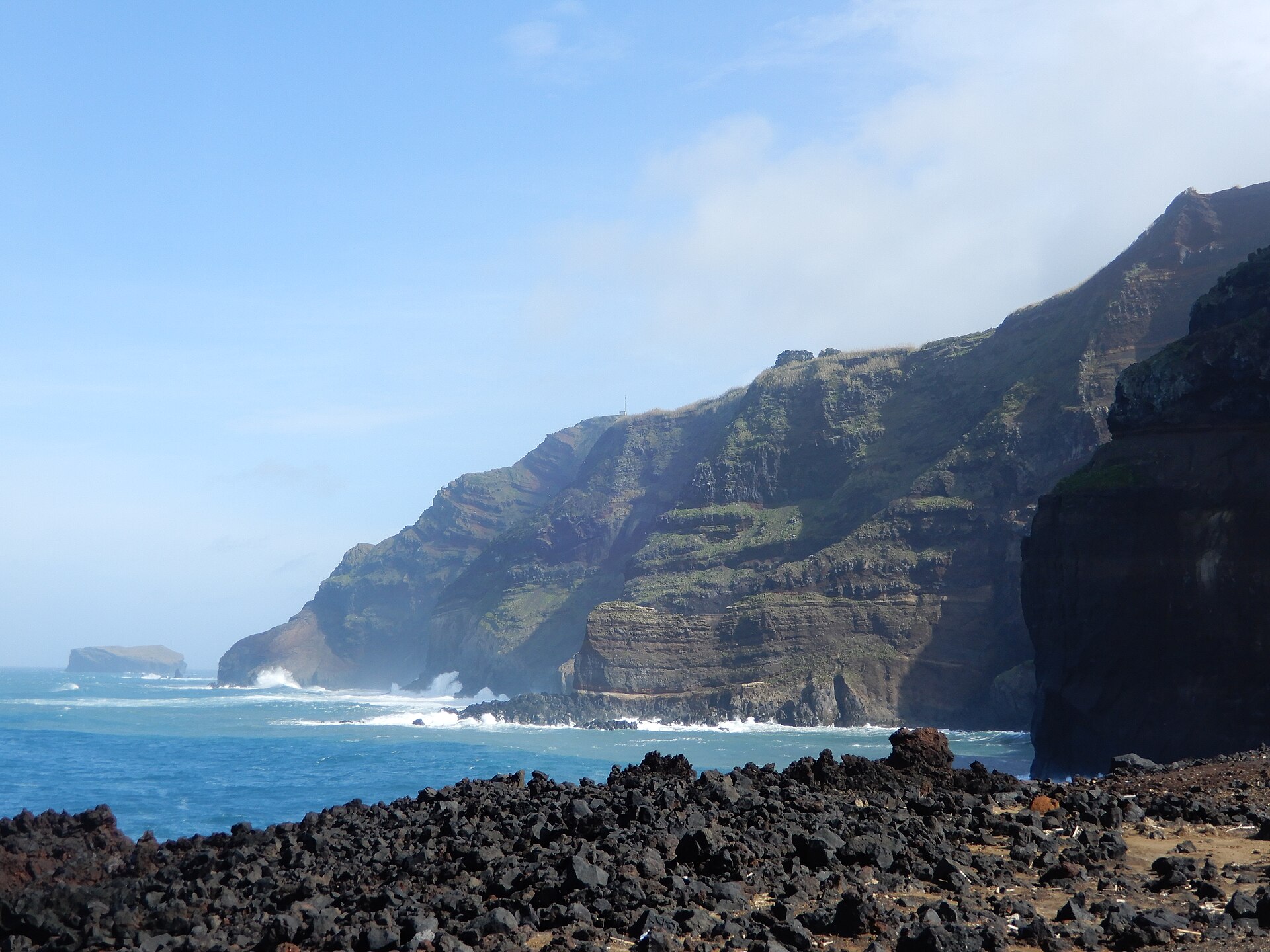
Ponta da Ferraria and Mosteiros: São Miguel's west tip, the hot sea pool, the lighthouse and Escalvado
The Ferraria road reopened in May 2026 under traffic lights after the 2025 landslide, and the paid spa has closed for good. How to time the free hot sea pool with the tide, the PRC43SMI cinder-cone loop, the 1901 lighthouse, the Escalvado whaling lookout and the Mosteiros sunset.