 Back to Tips
The priolo on São Miguel: the Priolo Centre, the Tronqueira forest and where to see the Azores bullfinch
 Azores Guide
The Azores bullfinch lives only in the laurel forest behind Nordeste. The Priolo Centre's 2026 season and hours, its guided tours from €40, how to look for the bird yourself, the Pico da Vara permit, and what to do with a grounded shearwater in October and November.
The priolo, or Azores bullfinch, lives on São Miguel and nowhere else. Its whole range is a strip of native laurel forest in the island's north-east, in the hills behind Nordeste and Povoação. You will not see it at Sete Cidades or Furnas, and you are unlikely to meet it by chance. If you want to see one, plan a morning in the Serra da Tronqueira around the Centro Ambiental do Priolo, the visitor centre that SPEA, the Portuguese bird conservation society, runs in an old forest guard's house. This guide covers the centre's season and tours, what the bird looks like and how to look for it, and what to do in October and November when young shearwaters fall on the island's streets.
The bird, briefly
The priolo is a plump finch, 15 to 17 cm long and around 30 g. It has a black cap, face, wings and tail, and grey to grey-brown plumage elsewhere. It has none of the pink on the breast that a European bullfinch has, so at first it looks dull. Males and females are almost the same. You will usually hear it before you see it: the contact call is a short, soft whistle that sounds a little sad.
It feeds mostly on plants: seeds, fruit, flower buds, fern spore cases and moss tips. A main food is Clethra arborea, the lily-of-the-valley tree. Through the year the birds move up and down the slopes as different plants come into season, between roughly 300 and 800 m.
In the 19th century the priolo was common enough around Furnas for orange growers to treat it as a pest. Then it was thought extinct from 1932 until it turned up again in 1967. By the late 1970s there were thought to be 30 to 40 pairs. The native laurel forest it feeds in had shrunk, and invasive plants had taken over much of what was left.
From critically endangered to vulnerable
The recovery came through six EU LIFE conservation projects over almost 30 years. According to the European Commission agency that funds them, the first LIFE project began with fewer than 100 breeding pairs left. By 2023 the count was more than 1,300 birds, stable for eight years. Close to 450 hectares of laurel forest have been restored and nearly 500,000 native trees planted. The IUCN Red List status went from critically endangered in 2003 to vulnerable in 2016.
The bird's range is still small: roughly 580 hectares centred on Pico da Vara, the island's highest peak at 1,103 m. From September to December a smaller group also shows up further west in the same range, around Salto do Cavalo, probably young birds spreading out after the breeding season. It has never been recorded at the western end of the island.
The Centro Ambiental do Priolo
The centre is in the Cancela do Cinzeiro forest recreation reserve, at Pedreira in the municipality of Nordeste. The LIFE Priolo project helped build it. Inside are an exhibition on the priolo and the laurel forest, a small shop and a bar for coffee or tea.
The centre's website gives 15 February to 15 November, Tuesday to Saturday, 10:30 to 18:00. Outside those dates and hours, visits are by appointment and depend on staff being free. Sundays and Mondays are not on the list, and from mid-November you need to arrange a visit ahead.
By car, take the expressway towards Nordeste, then the regional road up to Pedreira, and follow the signs to the Centro Ambiental do Priolo. The centre gives its position as 37°48'5.8"N, 25°9'47.39"W. Ring +351 918 536 123 or write to centropriolo@spea.pt before a long drive, because the hours on the site carry no year.
The guided tours
Your best chance of seeing a priolo is to go out with the centre's guides. In October 2026 the centre's website listed four tours, priced per person for a group of two or more (ask for the price if you are on your own):
- Tour Priolo: three hours, by car, €40. This is the one aimed at the bird itself.
- Tour Laurissilva: two and a half hours on foot through the laurel forest, €20.
- Tour Viveiros: two and a half hours on foot, a visit to the nurseries where the native plants for the restoration are grown, €20.
- Tour Full-day: six hours, by car, €75.
Book through the form linked on the centre's tours page. The page gives no fixed start times, so you agree the time when you book. The hills around Pico da Vara are often in cloud, and in fog you will hear birds but not see them, so ask for the earliest slot and keep a spare day if you can.
Looking on your own
The priolo is often in cloud, often high in the trees and often quiet, which makes it hard to find on your own in a short visit. If you try anyway:
- Stay on roads and marked paths. The Tronqueira and Planalto dos Graminhais area is a protected habitat zone, and the Pico da Vara summit is a nature reserve.
- Listen for the whistle and watch the tops of the trees.
- The official climb to Pico da Vara, PRC07SMI, starts at the Atalhada forest guard house above Santo António Nordestinho. It needs an authorisation: the trail leaflet links a form to request it. The Natural Park's access notice closes the paths via Algarvia for safety, so the route from Santo António Nordestinho is the only authorised way up. Our Nordeste and Povoação guide has more on the climb and the viewpoints on the coast below.
In October and November: the cagarros
The other bird you may meet on São Miguel in autumn is the cagarro, Cory's shearwater. It nests on the coast, and the young birds leave the nest for the sea in October and November. Many are confused by coastal lighting on their first flight and come down on land, where cats, cars and exhaustion kill them.
SPEA runs SOS Cagarro rescue brigades on São Miguel in Vila Franca do Campo, Povoação and Nordeste. In 2026 the Vila Franca brigades met at the Clube Naval, with night patrols from 21:00 to 2:00 and morning release sessions on weekends and holidays from 10:00. Rescued birds are released the next morning in the same areas. Anyone can sign up on the centre's SOS Cagarro page; registered volunteers are covered by accident insurance.
If you find a grounded shearwater, SPEA asks you to rescue it and register the rescue on the Azores government form linked from the SOS Cagarro page. If you cannot handle the bird, call the SOS Ambiente line on 800 292 800.
How to fit it into a trip
The centre and the Nordeste coast fill a day. Do the tour or the centre first, then drive down to the viewpoints at Ponta do Sossego and Ponta da Madrugada, or west along the north coast towards the Gorreana tea plantation. If you are staying in Ponta Delgada it is a long day, so start early. In winter, check the centre will be staffed before you drive out.
Quick answers
Where can you see the Azores bullfinch? Only on São Miguel, in the native laurel forest of the Serra da Tronqueira around Pico da Vara, at the eastern end of the island.
When is the Priolo Centre open? The centre's website gives 15 February to 15 November, Tuesday to Saturday, 10:30 to 18:00, and other dates by appointment. Check by phone first.
How much is a priolo tour? In October 2026 the three-hour Tour Priolo was listed at €40 per person for two or more, and the walking tours at €20.
What should you do with a fallen shearwater? Rescue it and register it on the SOS Cagarro form, or call the SOS Ambiente line on 800 292 800 if you cannot.
Sources
- Centro Ambiental do Priolo: the centre, hours and directions (SPEA)
- Centro Ambiental do Priolo: tours and prices (SPEA)
- SOS Cagarro brigades and what to do with a fallen bird (SPEA)
- Centro Ambiental do Priolo agenda 2026 (SPEA)
- Centro Ambiental do Priolo, Visit Azores
- How LIFE pulled one of Europe's rarest birds back from extinction, CINEA (European Commission), 2023
- PRC07SMI Pico da Vara trail leaflet, Trails Azores
- PRC07SMI Pico da Vara access notice: closed sections and authorised route, Azores government
- Azores bullfinch, Wikipedia
Azores Guide
Author
More Travel Tips
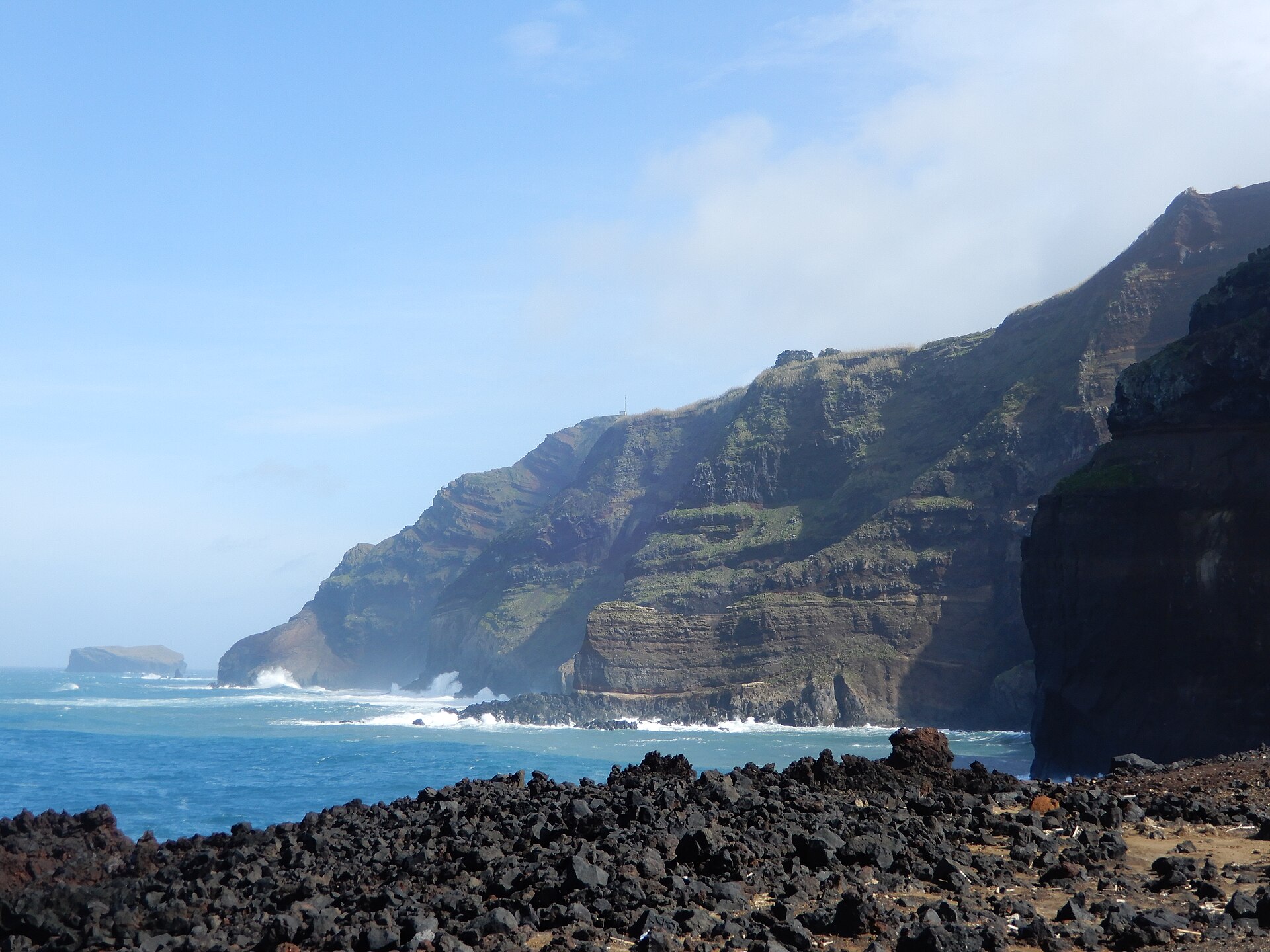
Ponta da Ferraria and Mosteiros: São Miguel's west tip, the hot sea pool, the lighthouse and Escalvado
The Ferraria road reopened in May 2026 under traffic lights after the 2025 landslide, and the paid spa has closed for good. How to time the free hot sea pool with the tide, the PRC43SMI cinder-cone loop, the 1901 lighthouse, the Escalvado whaling lookout and the Mosteiros sunset.

Capelas, São Miguel: Morro das Capelas, the sea pools and the north-west coast
Twelve kilometres north of Ponta Delgada and far quieter than Sete Cidades: a submarine volcano that joined the island, the Poços sea pool and its 2026 bathing season, a teacher's workshop museum, an easy coastal trail and the viewpoints west towards Bretanha.

São Miguel in winter: weather, hot pools, short days and what stays open
São Miguel from November to March: mild but wet, with December the wettest month and sunset at about 17:26 on the shortest day. Terra Nostra and Poça da Dona Beija stay open all winter, the Ponta Delgada museum keeps winter hours, whale boats still sail, the Lagoa do Fogo road is open to cars again, and the beaches have no lifeguards.